A business website has one real job: turn visitors into enquiries, bookings, or sales. Everything else — colours, animations, clever effects — is decoration in service of that job. Yet many websites are built backwards: design first, purpose later, speed never. This guide covers the practical decisions that make website development pay for itself, whether you are building your first site or rebuilding one that looks fine but quietly underperforms.
You do not need a huge budget to get these fundamentals right. You need the right order of priorities.
Start With the Job Your Website Must Do
Before choosing any platform or design, answer three questions in writing. Who is this site for? What single action do you most want them to take — call, message, buy, book, or request a quote? And what proof can you honestly show that you are good at what you do?
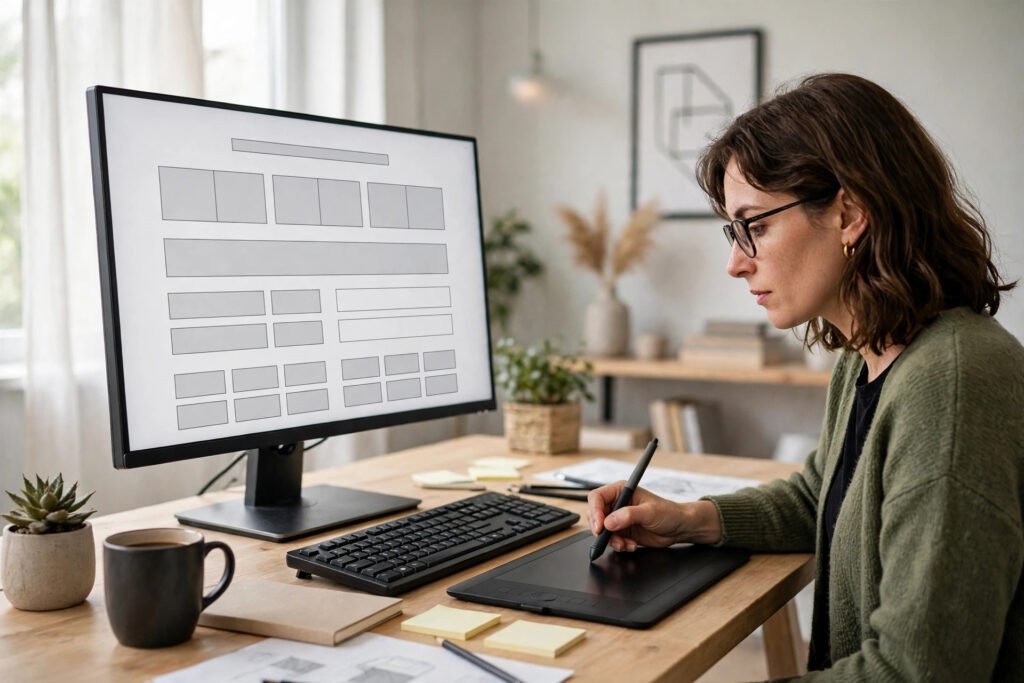
Those answers decide your structure. Most small businesses need only a handful of pages done well: a home page that explains the offer in seconds, service pages matched to what people actually search for, an about page that builds trust, a contact page that removes every excuse not to reach out, and — if you publish content — a blog. Ten focused pages will outperform fifty thin ones. Write the words before designing the layout; a beautiful page with vague copy converts nobody, while a plain page with a sharp message sells.
WordPress: The Practical Choice for Most Businesses
For the majority of small and mid-sized businesses, a WordPress website is the sensible default. It is flexible enough for almost any requirement, you own your site and your data (unlike closed rental platforms), thousands of developers can maintain it, and it handles SEO well when set up properly. A business website on WordPress can start simple and grow: add a booking system, a shop, or new languages later without rebuilding from scratch.
Whatever platform you choose, insist on three things: the site must be registered in your name (domain and hosting accounts you control), you must have full admin access, and there must be a backup system you understand. Being locked out of your own website by a developer who has gone quiet is a surprisingly common and entirely avoidable disaster.
Speed: The Feature Every Visitor Feels
Nobody complains about a fast website; everybody abandons a slow one. Speed is not a technical luxury — it is the first impression of your professionalism, and search engines factor it into rankings. The good news is that most speed problems have simple causes:
- Images. Oversized photos are the number-one culprit. Compress images before uploading and serve modern formats where possible.
- Hosting. The cheapest hosting tier often means a crowded, slow server. Modest hosting with caching beats premium design on bad hosting.
- Too many plugins and scripts. Every add-on has a cost. Audit yours: if a plugin is not earning its place, remove it.
- Caching and a CDN. Page caching and a content delivery network are cheap or free and can transform load times, especially for international visitors.
Test your site with free tools such as PageSpeed Insights and treat the mobile score as the one that matters — that is how most of your visitors will experience it. Website optimization is rarely one big fix; it is ten small ones added together.

Design for Phones First, Not as an Afterthought
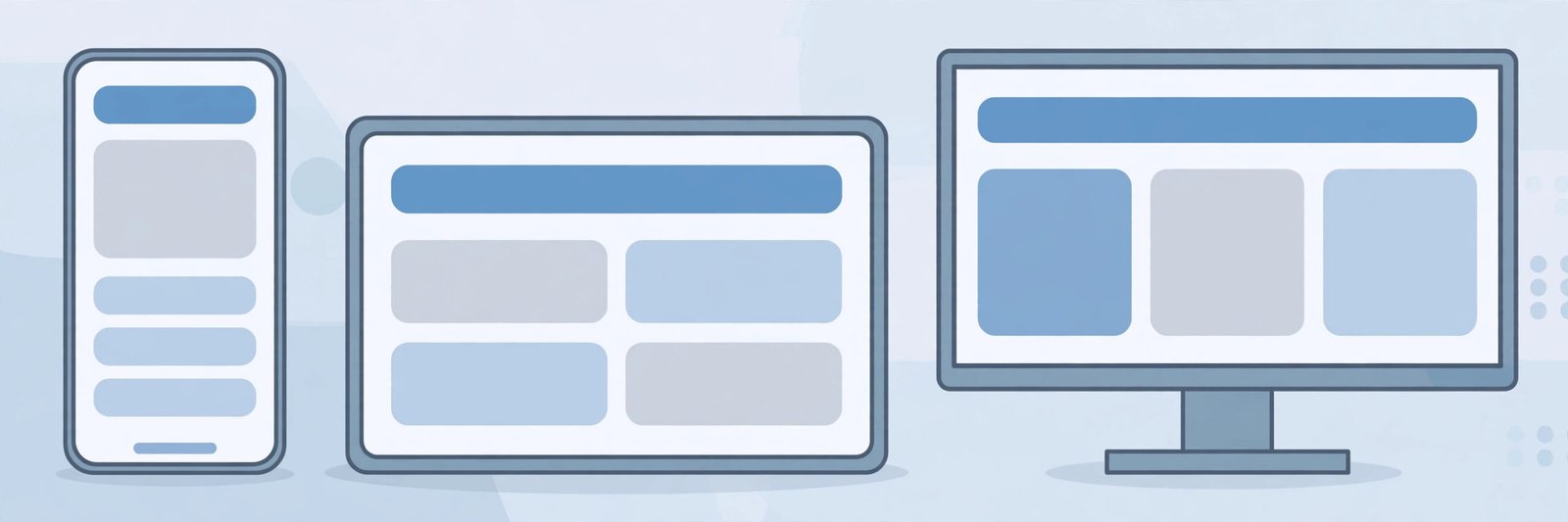
For most businesses, the majority of visitors arrive on a phone, often on a slow connection. Responsive design — a layout that adapts cleanly to any screen — is therefore not optional. Design and test the mobile version first: text readable without zooming, buttons large enough to tap, forms short enough to complete on a small screen, and your call or WhatsApp button reachable without scrolling or hunting through menus.
A useful exercise: hand your phone to someone unfamiliar with your business, show them your homepage for ten seconds, and ask what you sell and how they would contact you. If they cannot answer, your visitors cannot either — and no amount of traffic will fix that.
Landing Pages: Where Development Meets Marketing
Your homepage serves everyone; landing pages serve one campaign and one audience. When you run ads or promotions, send that traffic to a page built for it: headline matching the ad, one clear offer, brief supporting proof, and a single call to action with no competing exits. Businesses often double the return on the same ad spend simply by fixing this one step — the traffic was never the problem; the destination was.
Treat your website as a living asset, not a finished project. Review it quarterly: Are the services and prices current? Do all forms and buttons still work? Which pages earn enquiries, and which earn nothing? Small, steady improvements compound, just like they do in every other part of marketing.
Maintenance: The Unglamorous Part That Protects Everything
Launching the site is the halfway point, not the finish line. Websites need small, regular care: software updates applied promptly, backups tested rather than merely scheduled, old user accounts removed, and a periodic check that forms, maps, and contact buttons still work. Most hacked or broken small-business websites were not defeated by geniuses; they were simply left unmaintained until an automated attack or a silent failure found them. Thirty minutes a month of basic upkeep prevents the majority of disasters — and costs far less than rebuilding a compromised site or explaining downtime to customers.
Website Development at Ali Growth Lab
Ali Growth Lab builds conversion-focused websites with this philosophy: WordPress websites and business websites designed around your main call to action, dedicated landing pages for campaigns, website optimization and speed improvement for existing sites, and fully responsive design tested on real phones. With 6+ years of experience across development and SEO, your site is built to be found and to convert — and reporting stays transparent, so you know exactly what was delivered.
If your current website looks fine but brings no business — or you need one built properly from the start — message Ali Growth Lab on WhatsApp at https://wa.me/923000473390 and share your current site or your idea. You will get an honest assessment of what is worth building and what is not.
[…] an Android app means making decisions in three areas. First, the screens: how the app looks, how a user moves […]